360 feedback programs can be incredibly powerful (or incredibly frustrating), depending on how they’re carried out.
Done well, they build self-awareness, improve leadership capability, and support a strong feedback culture. Done poorly, they feel like a box-ticking exercise that creates anxiety and skepticism.
This step-by-step guide guides you through how to implement a 360 feedback program, with clear actions, common pitfalls to avoid, and a simple checklist you can follow from start to finish.
1 Clarify the Purpose
Before tools, surveys, or timelines, get clarity on why you’re running a 360.
Ask:
- Is this for development, performance evaluation, or both?
- Who is the primary audience (leaders, managers, team members)?
- What behaviours or competencies are you trying to reinforce?
Actions: A one-paragraph purpose statement you can reuse in all communications.
2 Secure Buy-In
A 360 program without leadership support is dead on arrival.
Make sure leaders understand:
- What the program is (and isn’t)
- How the data will be used
- What’s expected of them as participants
Equip managers to:
- Explain the process to their teams
- Encourage honest participation
- Support follow-up conversations
3 Define the Scope and Participants
Decide the boundaries of your first rollout.
Key decisions:
- Who will receive 360 feedback?
- Who will provide feedback (manager, peers, direct reports, others)?
- How many raters per person? (Typically 7–12 total)
Best practice: Start small. A pilot group (e.g., senior leaders or one function) lets you test, learn, and refine before scaling up.
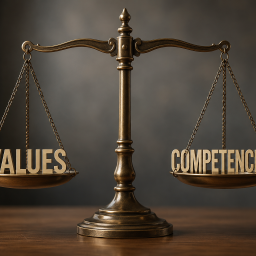
4 Align with your Company values
This is where many programs go wrong.
Your survey should:
- Focus on observable behaviours, not personality traits
- Align with organisations leadership model, values and behaviours that are relevant to drive the business long-term
- Be short enough to complete in 15-20 minutes
Avoid:
- Overloaded surveys
- Vague questions
- Irrelevant competencies
Rule of thumb: 6–8 competencies, 5-8 questions each, plus optional open-text comments.
5 Select Your 360 Feedback Tool
Your tool should match your goals, not the other way around.
Look for:
- Confidentiality and anonymity controls
- Clear, visual reports
- Easy rater nomination and reminders
- Data security and compliance
6 Communicate Early, Clearly, and Often
Transparent communication builds trust and participation.
Your launch communication should explain:
- Why the program exists
- How anonymity works
- What happens after feedback is collected
- How much time it will take
Reinforce:
- Feedback is confidential
- The goal is growth, not judgment
7 Launch and Monitor Participation
Once live:
- Track completion rates at regular intervals
- Directly address any sticking points/lack of action and support if necessary
- Be available for questions or concerns
Watch out for red flags:
- No selection of raters
- Low response rates
- Confusion about anonymity
Address issues quickly to protect credibility!
8 Deliver Feedback the Right Way
The feedback report is powerful, but only if people know how to read it.
Support participants with:
- A feedback interpretation guide
- Optional coaching or debrief sessions
- Time and space to reflect
Encourage them to:
- Look for patterns, not individual comments
- Compare self-ratings vs. others
- Focus on 1–2 development priorities
9 Turn Insight into Action
Feedback without follow-up is wasted effort.
Build in:
- Individual development plans
- Analysing group insights for common development activities
- Sharing results to create trust and future buy-in
Key question:
“What will I reinforce and/or do differently because of this feedback?”
Evaluate and Improve the Program
After the cycle:
- Gather participant feedback on the process
- Review completion rates and timelines
- Identify what worked and what didn’t
Use insights to:
- Refine questions
- Improve communication
- Scale the program with confidence
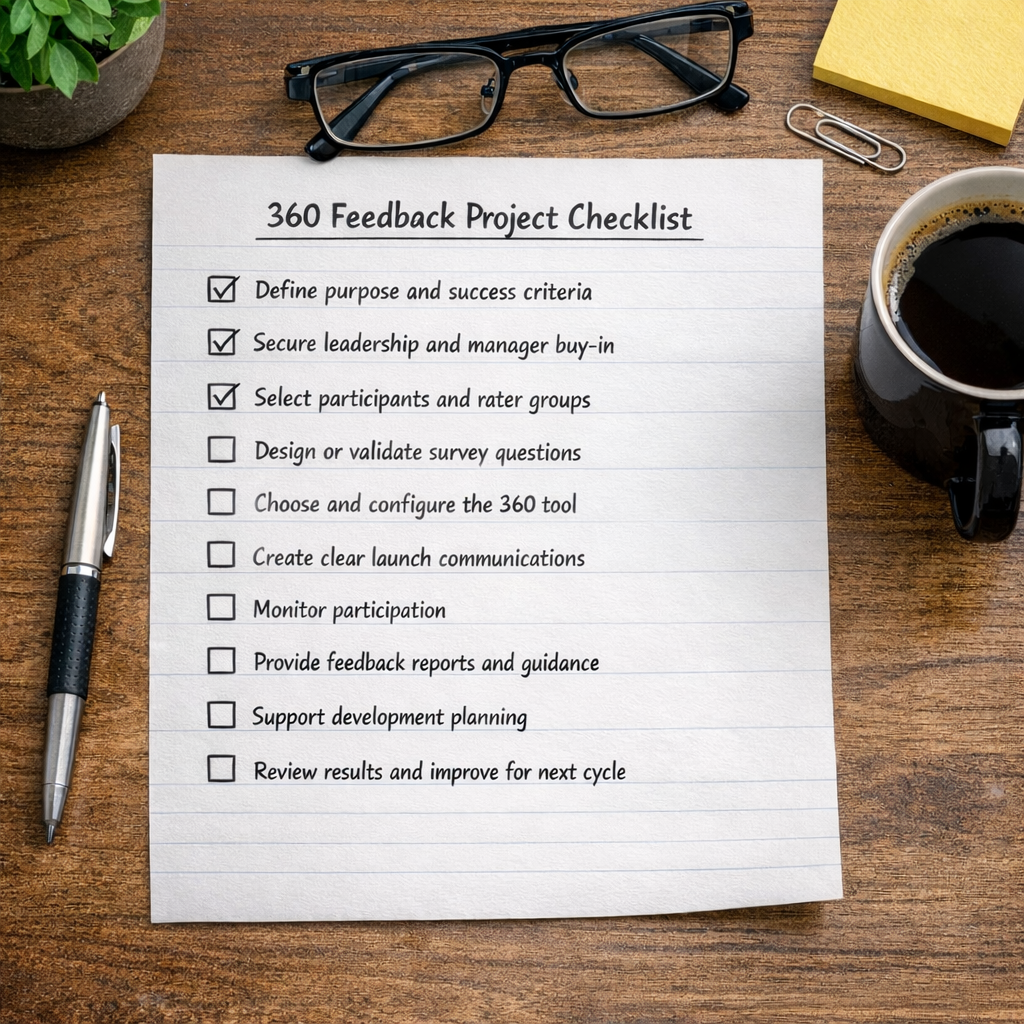
- Define purpose and success criteria
- Secure leadership and manager buy-in
- Select participants and rater groups
- Design and validate survey questions
- Choose and configure the 360 tool
- Create clear launch communications
- Monitor participation
- Provide feedback reports and guidance
- Support development planning
- Review results and improve for next cycle
A 360 feedback program isn’t just a survey—it’s an experience.
When designed thoughtfully and launched correctly, it can strengthen trust, accelerate development, and reinforce a culture of continuous feedback. Start simple, communicate clearly, and always keep the focus on growth.